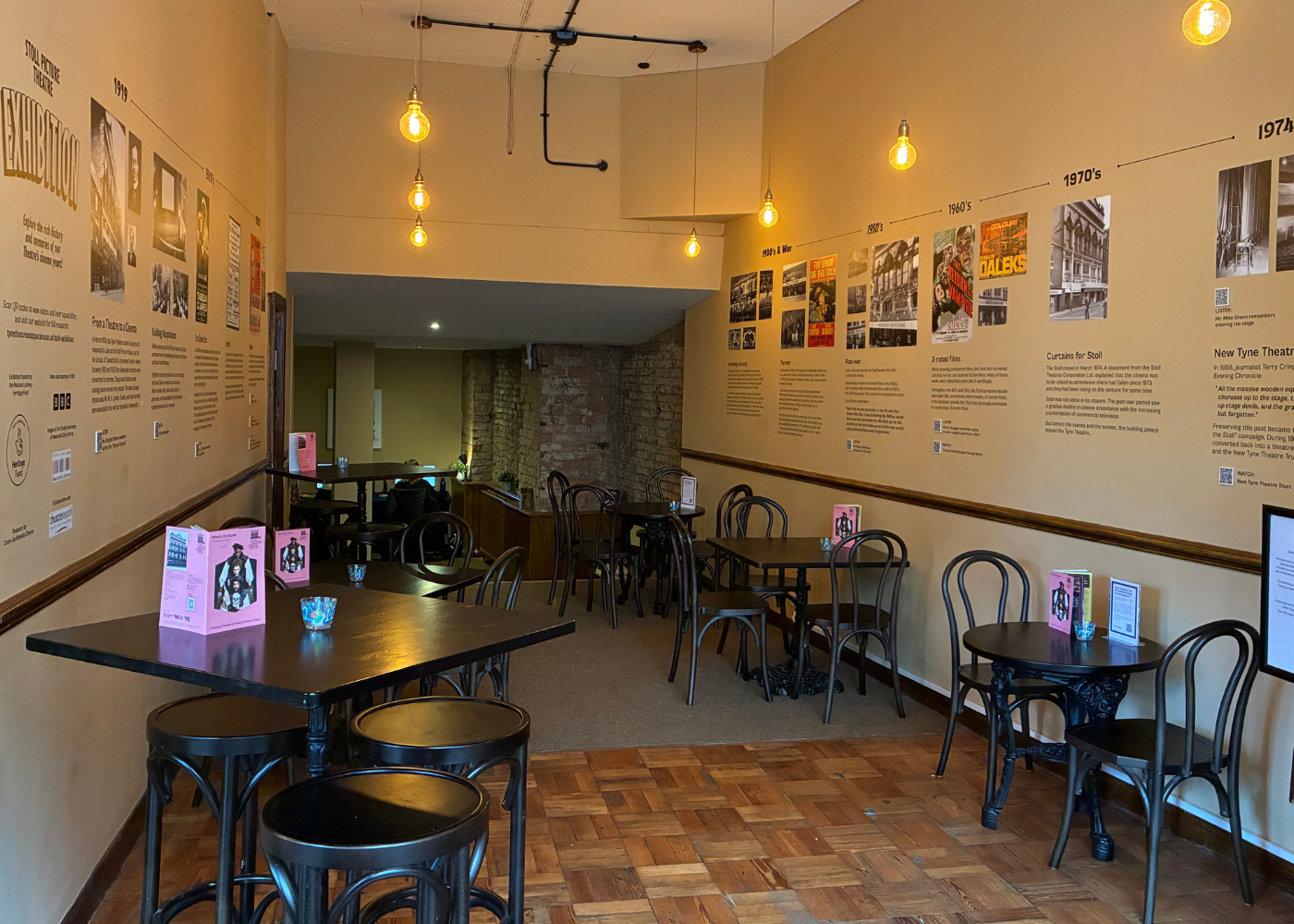
A major new exhibition celebrating a little-known chapter in the history of Tyne Theatre and Opera House is now open to the public inside the venue’s 1867 Café.
“The Stoll Cinema Years” shines a light on the period between 1919 and 1974, when the theatre operated as the Stoll Picture House – one of Newcastle’s most distinctive and influential cinemas.
The exhibition traces the building’s transformation in the wake of the First World War, when changing audiences and the rise of film led to a dramatic shift in entertainment. Originally opened as a theatre in 1867, the venue closed briefly in March 1919 before reopening just months later as a cinema under the ownership of pioneering impresario Oswald Stoll.
Visitors can explore how the building was adapted for its new purpose, including major renovations overseen by renowned theatre architect Frank Matcham. These changes transformed the auditorium into a modern picture house, complete with a luxurious winter garden café, new seating, improved acoustics and a purpose-built projection chamber.
The exhibition also brings to life the experience of early cinemagoing, when audiences enjoyed multi-hour programmes combining feature films, short films, live music and variety acts. From silent film stars such as Charlie Chaplin and Buster Keaton to the arrival of the “talkies” in 1929, the Stoll played a central role in shaping Newcastle’s film culture.
Over the following decades, the cinema evolved with changing tastes—hosting Sunday lectures, showcasing international cinema, and later becoming known for its bold programming of cult, horror and X-rated films. It also played an important role during the Second World War, providing both escapism and community connection.
The exhibition culminates with the closure of the Stoll in 1974, and the remarkable campaign that followed, saving the building and restoring it to its original purpose as a theatre.
Jonathan Higgins, Chief Executive of Tyne Theatre & Opera House said:
“This exhibition reveals a fascinating and often overlooked chapter in our history. The Stoll years were a period of constant reinvention, reflecting wider social and cultural change in Newcastle and beyond. We’re delighted to share these stories with audiences in the very space where many of them first unfolded.”
“The Stoll Cinema Years” is now on display in the 1867 Café and is free to view during opening hours.