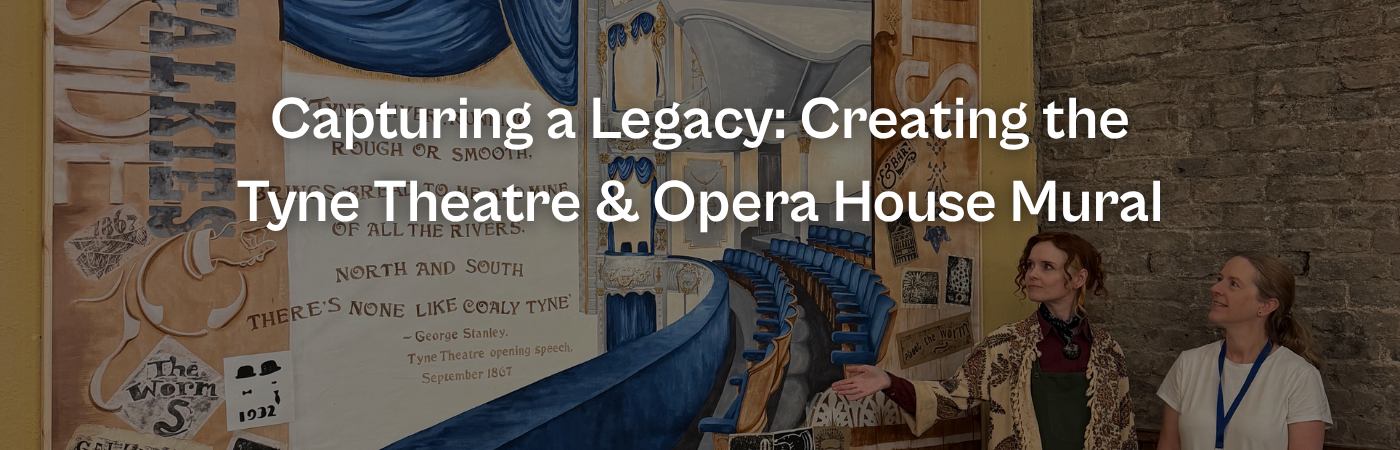
In this guest blog, artist Lucy Wilkinson shares the story behind her mural for the Tyne Theatre & Opera House’s 1867 Hall. Written in her own words, the article explores the inspiration, community collaboration and creative process that shaped the final piece.
This project was jointly funded by TTOH and Creative Central NCL.
In March 2026, I was commissioned by the Tyne Theatre to produce a mural for the newly refurbished 1867 hall.
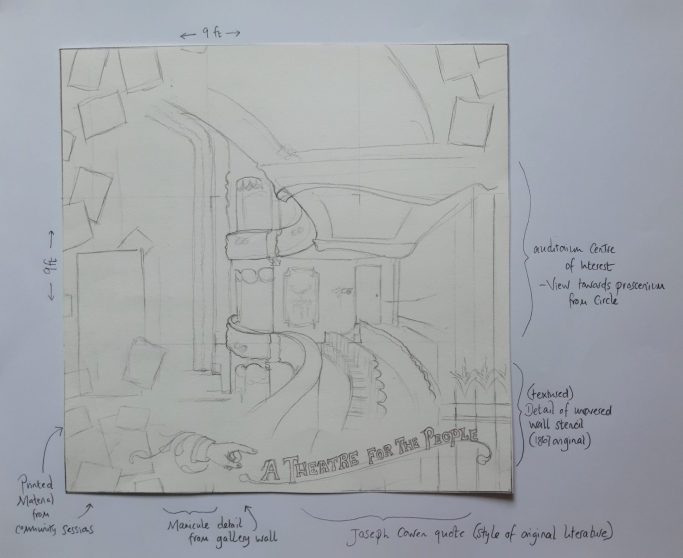
The brief asked that the piece reflect the heritage of the theatre and the community surrounding the venue. The mural itself was to be 9ft by 9ft square and the preparatory stage of the work included two community workshops, which could be research or creative in focus (or both!).
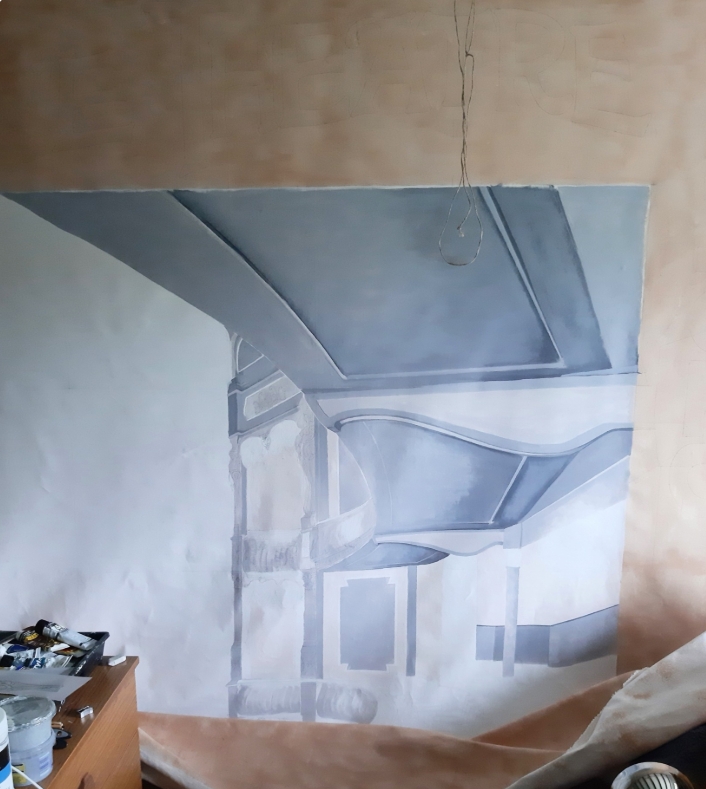
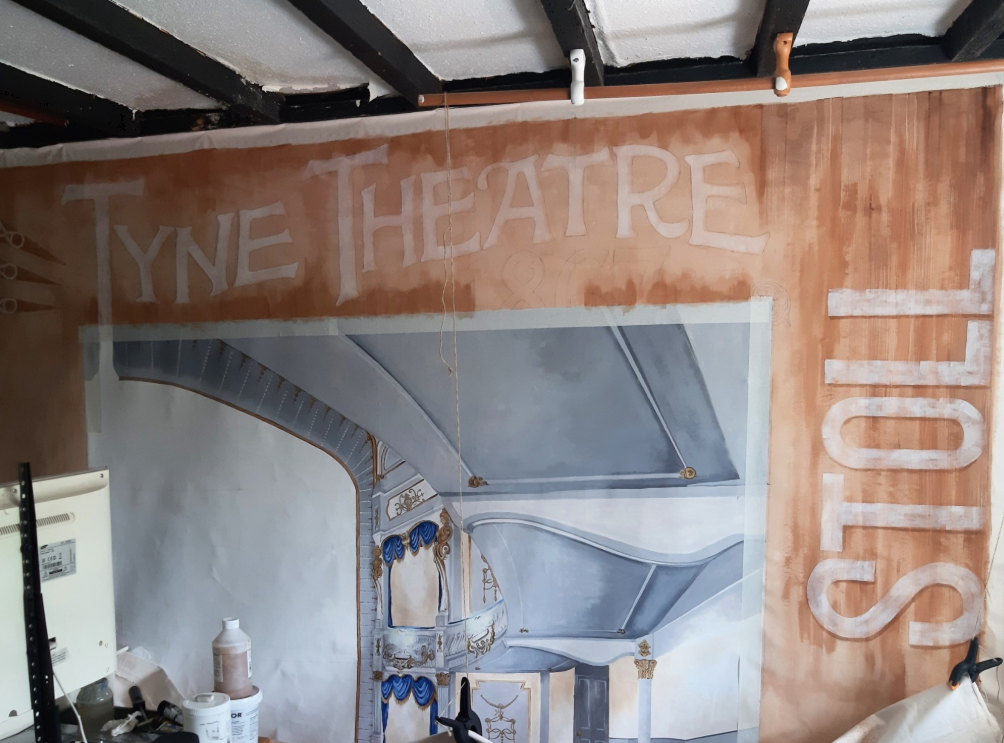
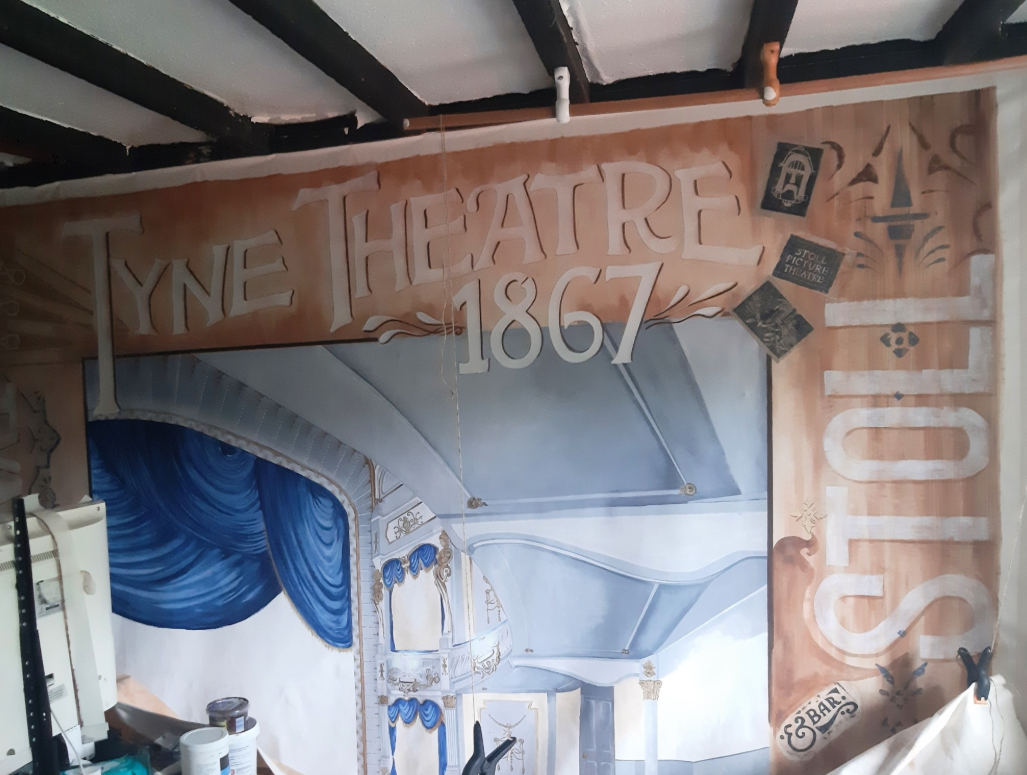
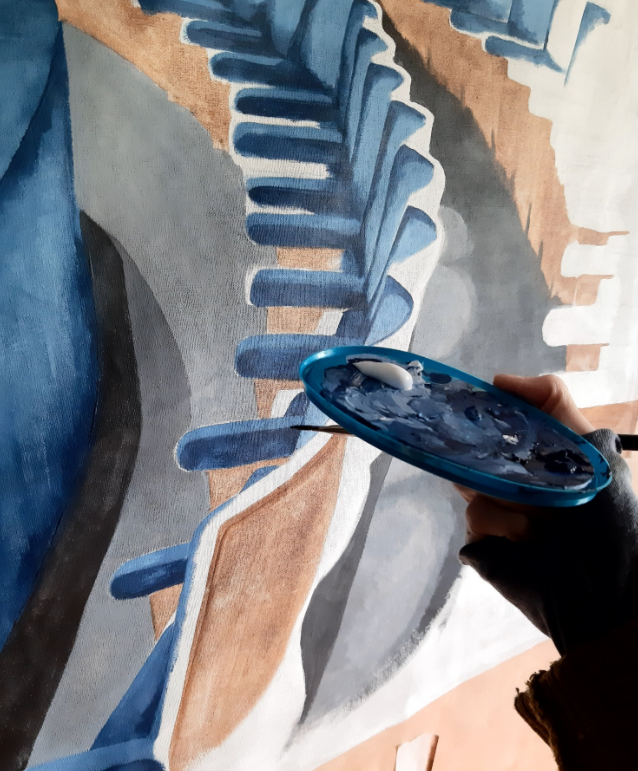
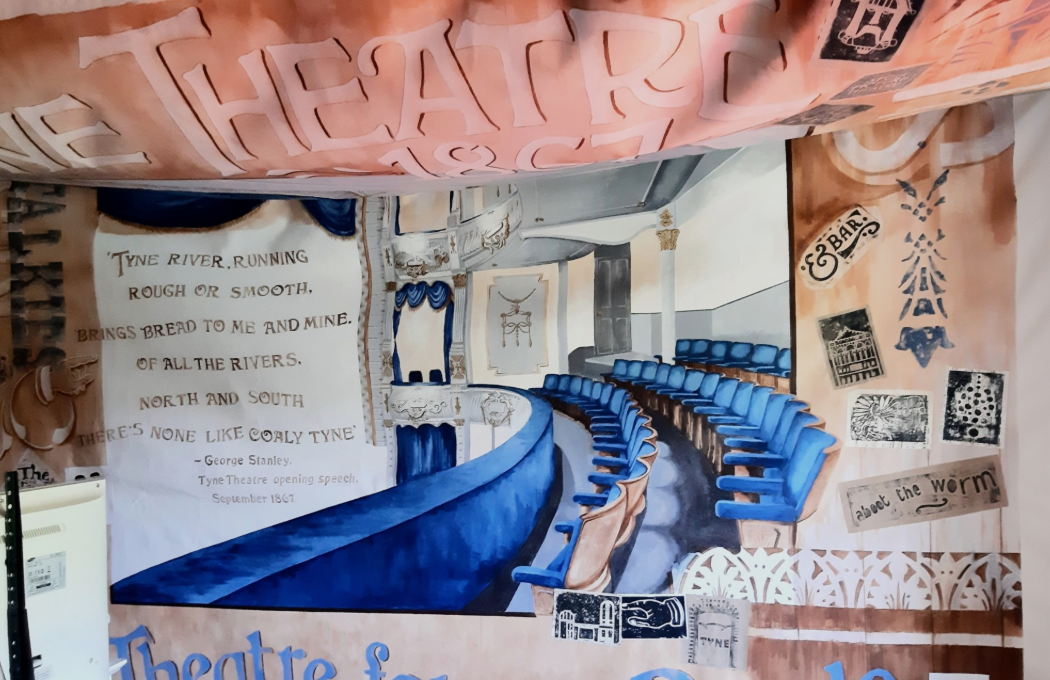
The painting composition was built around a centre of interest which would show the dramatic beauty of the auditorium using a sweeping view from the grand circle towards the stage, highlighting the detail and opulence of the space.
The perspective view was chosen specifically to encourage a feeling of ‘being present’ in the auditorium, drawing the viewer into the space and closer to the mural to then contemplate the detail and words chosen as part of the piece.
Consideration was given to colour palette; the vibrant blue of the seats plays very well against the umber tones chosen for the border and reflects the tone of the space where the mural is situated.
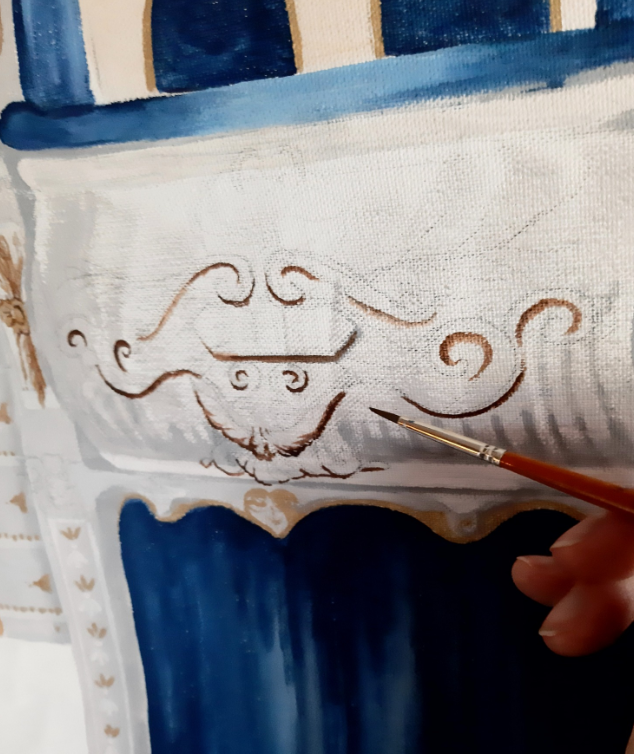
I was also keen to include elements and points of interest from lesser noticed or seen parts of the theatre, particularly those visible in the auditorium and the recently revealed stencil and paint details in the upper circle areas. These features form the border of the mural.
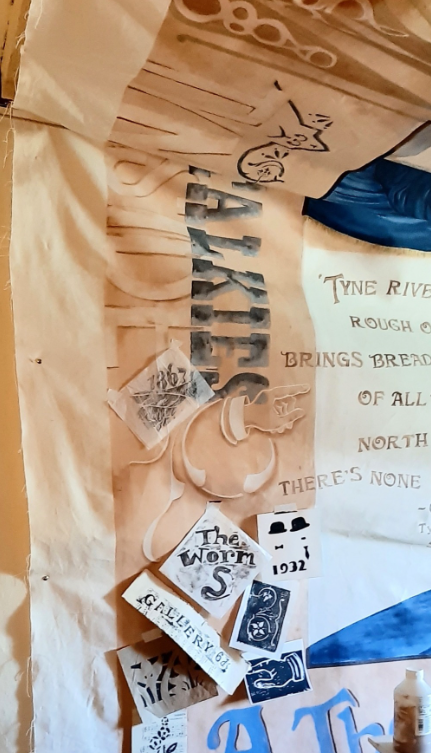
Words were also used quite extensively as part of the design. This seemed to me to be a vital part of reflecting the rich social and oral history of the venue.
Included in the final mural are references to the changing uses of the building over time (the Stoll cinema, and its status as the first ‘talkie’ cinema in town) and quotes from both Joseph Cowen and George Stanley.
The elements mentioned above provided a rich source of inspiration for attendees of the community workshops which took place before the mural was painted.
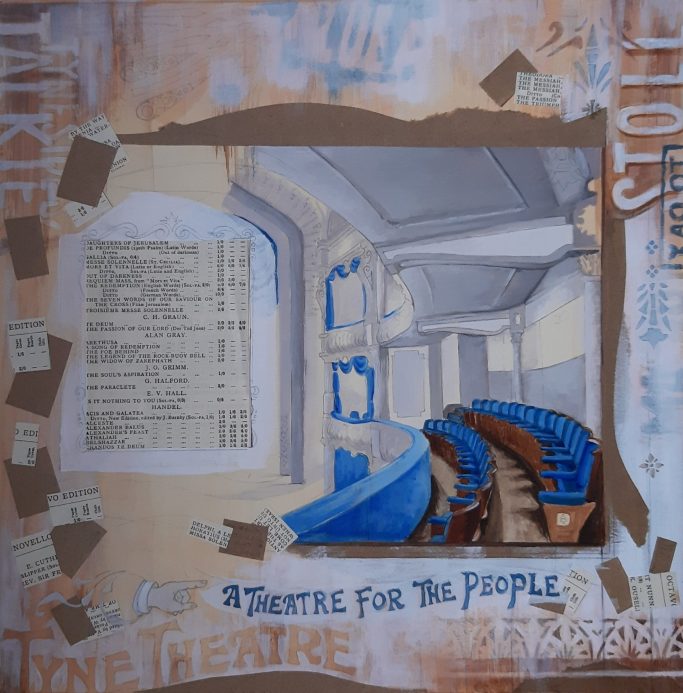
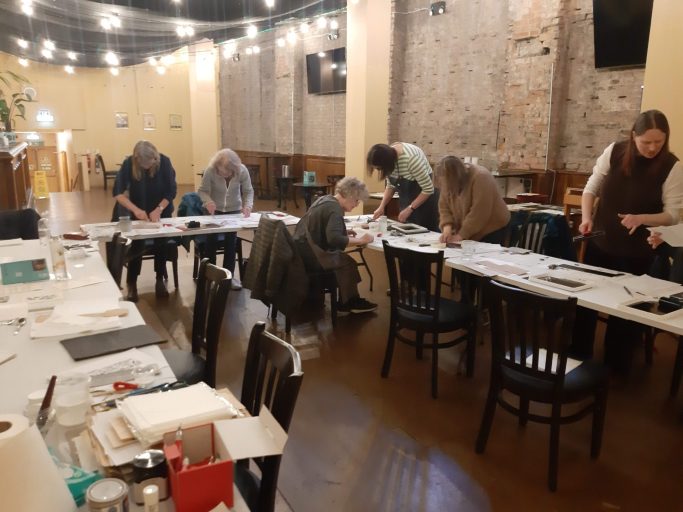
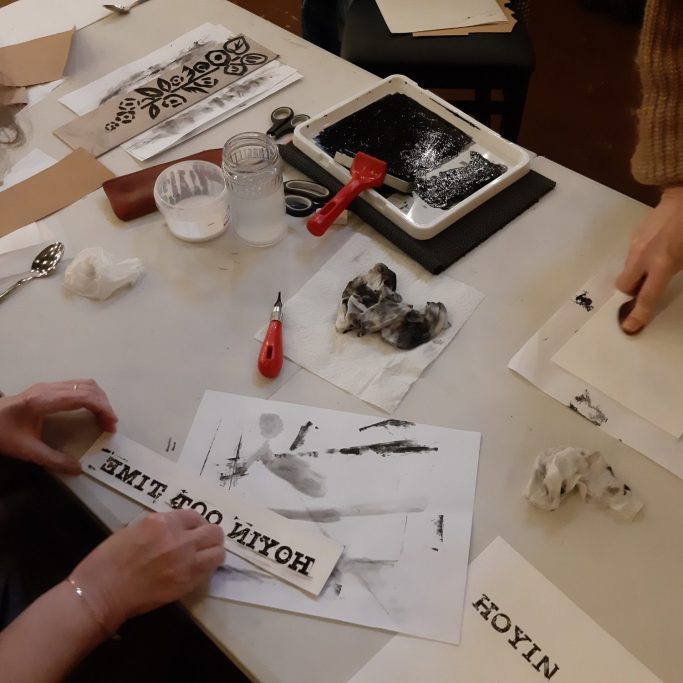
My intention was to combine both creativity and research. To that end, the workshops consisted of using imagery, materials and words inspired by the theatre’s heritage to produce prints (both linocut and collagraph) which could then be used as part of the final composition.
The workshops were a great success, with lots of stories shared and even some singing (Lambton worm anyone?) The creativity, work produced and sense of community provided a great inspiration to me as I began work on the final canvas.
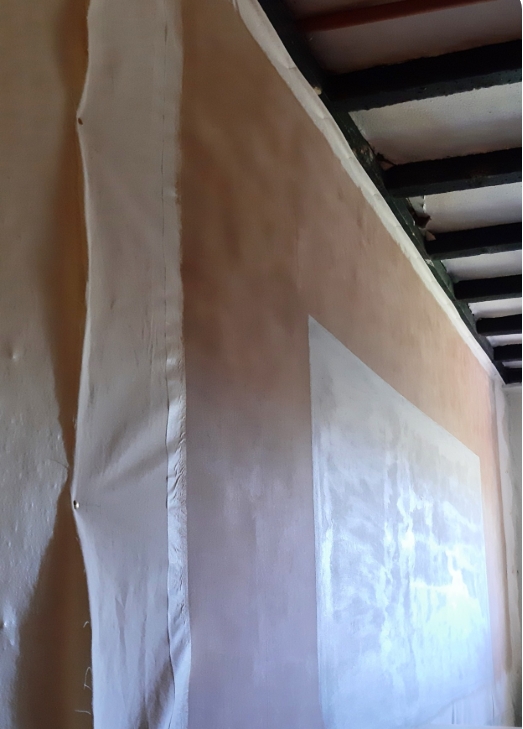
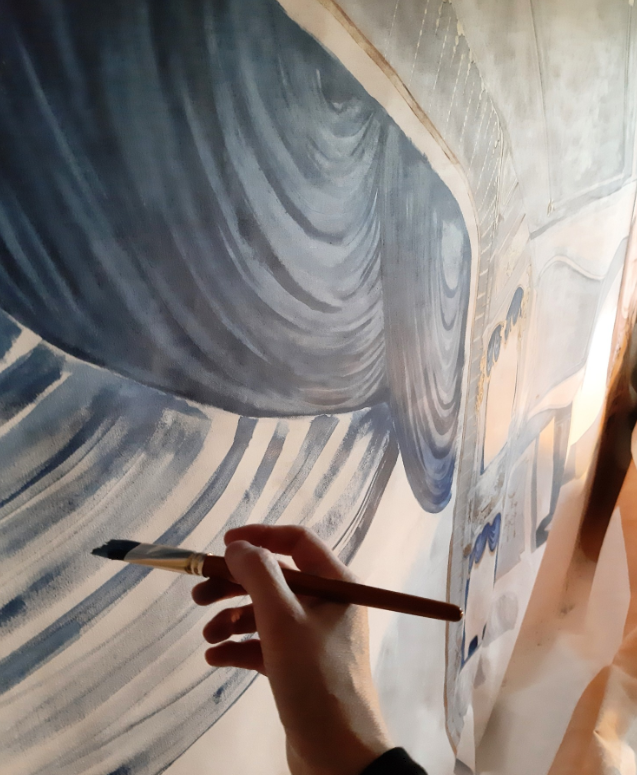
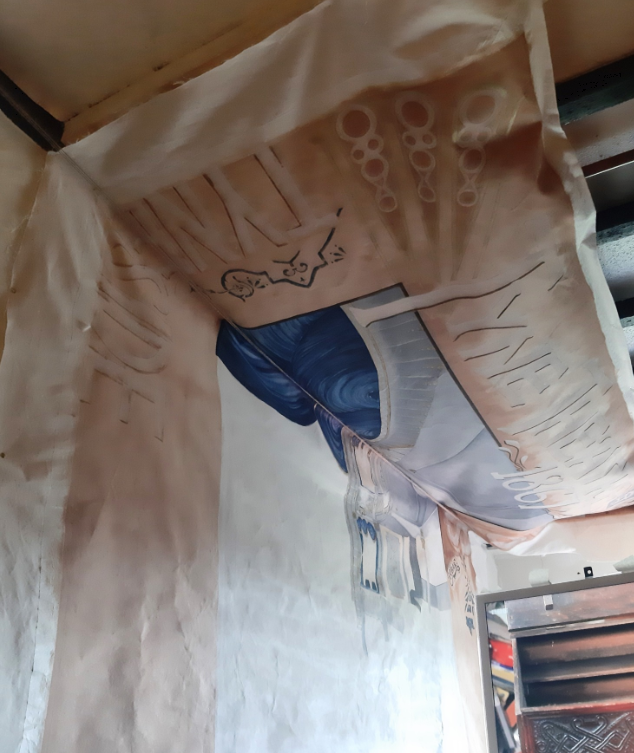
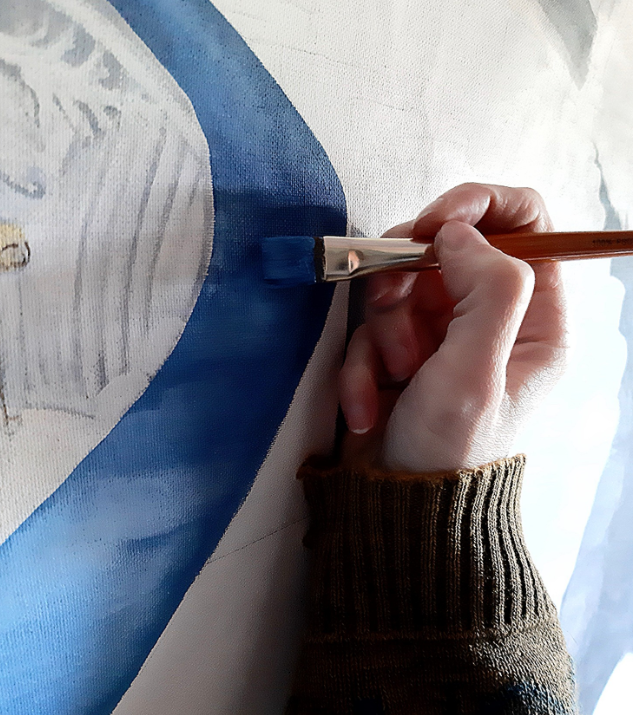
The mural was painted off-site, in a small studio space at my home in Northumberland. Since the walls measure around 6.5ft high in total this was definitely a challenge, but with some wrangling, a solution was found.
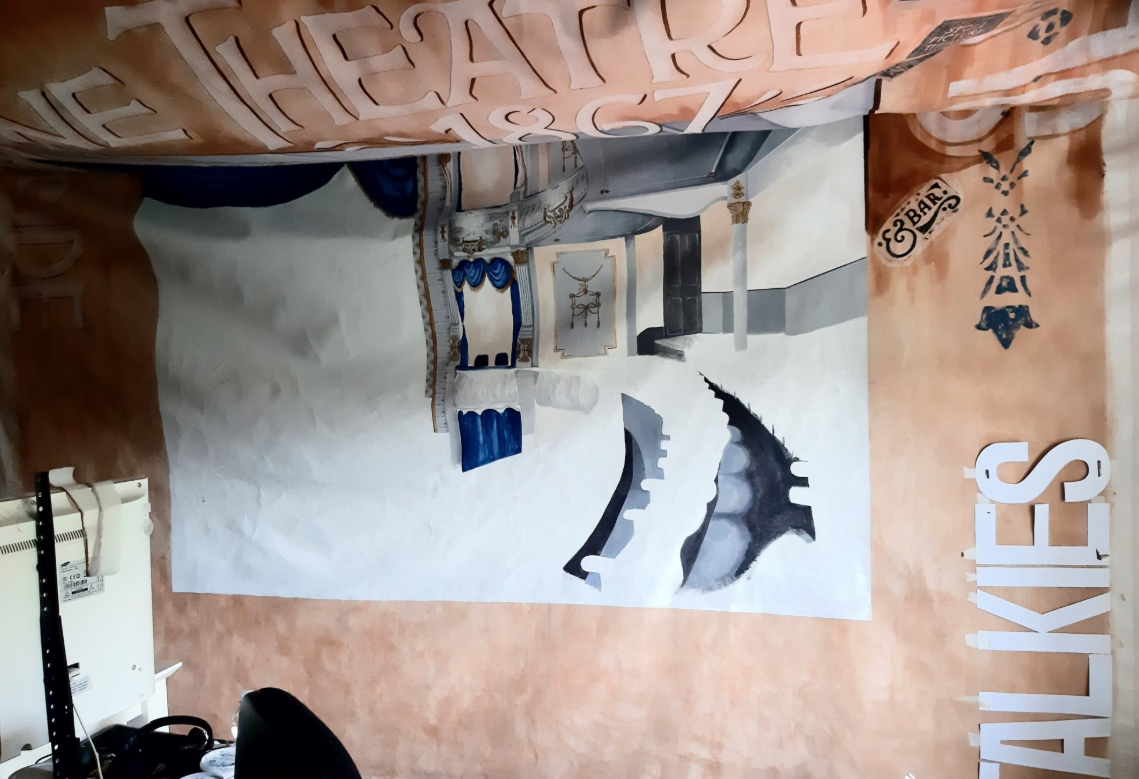
The canvas was effectively painted in two halves, with the top of the composition completed first, and the bottom completed after.
The canvas was pinned to the wooden beams in the room to keep the tension needed for gessoing/painting, then lifted and pinned again for the second half of the painting. If this sounds complicated, it was!
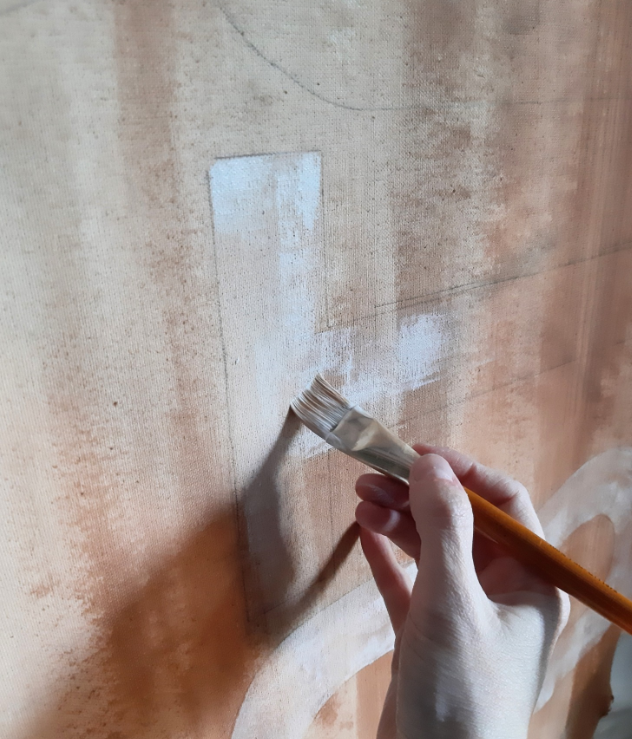
The drawing was transferred to the canvas in graphite using photos and my initial mock up as reference and a drawn grid consisting of 1.5ft squares.
This was essential to maintain proportion and ensure the sweep of the grand circle’s ceiling and seats was mirrored above and below in the centre of the painting.
Once complete, the finished mural was unpinned, carefully rolled and transported to the venue. There, it was installed on a wooden frame kindly prepared by Colin Hopkins, Master Carpenter at the theatre.
If you would like to read more about the heritage of this wonderful venue, you can visit their historic information and archive here: TTOH History & Heritage.